
Become a Supporter Today

Post Date: February 10, 2026
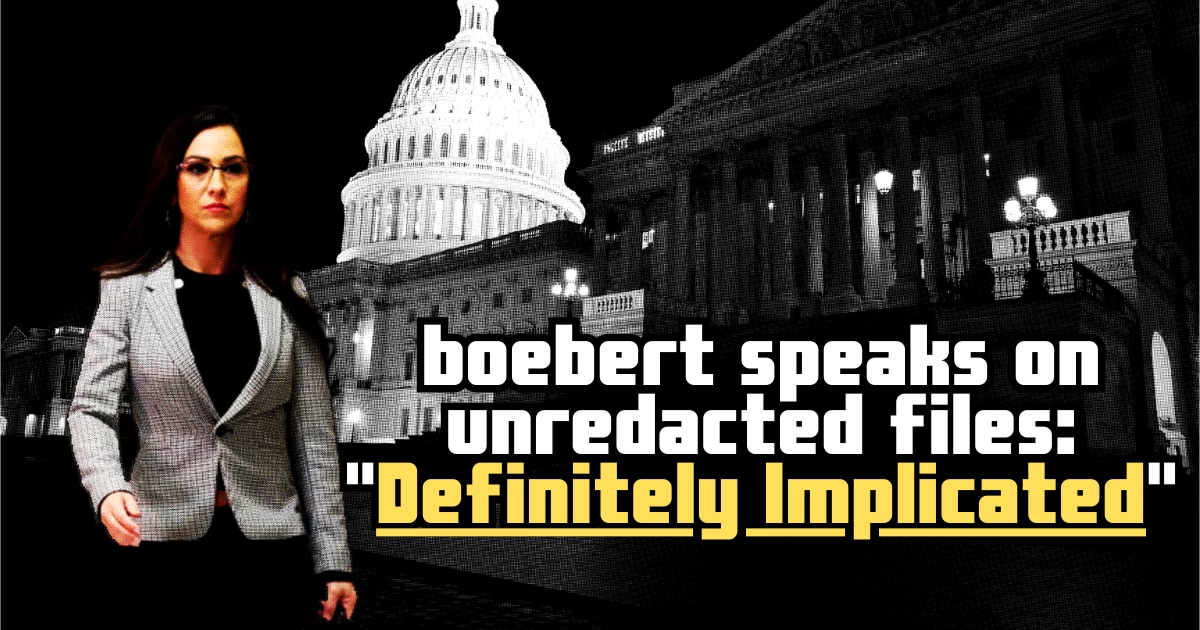
Representative Lauren Boebert emerged from the Capitol late one evening with a distinct reaction to the unredacted Jeffrey Epstein files she had just viewed. Captured in a brief interview while descending the Capitol steps, the Congresswoman did not mince words about what she saw or her expectations for the fallout.
Initial Reactions: “Co-Conspirators” and False Victims
Boebert confirmed she had viewed “some” but not all of the unredacted documents and planned to return the following day to finish. Her initial assessment was stark. She told the interviewer that she believes there are individuals named in the files who are “definitely implicated” as “co-conspirators.”
Perhaps the most controversial takeaway was her skepticism regarding the status of everyone involved. Boebert noted that she does not believe everyone discussed in the context of underage trafficking is actually a victim. This suggests she perceives a gray area in the documents where participants might be claiming victimhood to shield themselves from scrutiny.
She was equally emphatic regarding Ghislaine Maxwell. When asked about potential clemency, Boebert rejected the idea entirely. She argued that Maxwell deserves “more time” and a “harsher prison” than her current situation, calling the crimes “absolutely disgusting.”
Speculation: Following the Evidence or Political Theater?
The real question now is how Boebert will utilize this information in the coming weeks. She has established herself as a political firebrand who is unafraid to challenge the establishment. This access to raw intelligence presents a fork in the road for her public messaging.
One path is the strict pursuit of evidence. If Boebert chooses this route, she will likely focus on cross-referencing the “implicated” individuals she mentioned with concrete legal definitions of conspiracy. This would involve a measured approach, distinguishing between those who were merely present in Epstein’s orbit and those who actively facilitated crimes. Given her comments about false victims, she may be preparing to challenge the narratives of specific individuals who have previously escaped public condemnation.
The alternative path is that Boebert takes a “different turn” by using the files primarily as political ammunition. The Epstein saga is rife with high-profile names from both sides of the aisle. There is a strong possibility that her evolution on this issue will align with her broader political goals. She might focus her outrage selectively on political opponents while downplaying or ignoring inconvenient names.
Her assertion that there are “co-conspirators” suggests she is already building a case for a wider net of guilt. Whether that net is cast based on blind justice or partisan strategy remains to be seen. If history is any indicator, Boebert will likely merge the two. She will probably use the evidence to fuel a populist narrative that the elite are protected from consequences. The risk is that the nuance of the evidence could be lost in the hunt for soundbites.
For now, Boebert seems intent on digging deeper. Her promise to return and view more files indicates that this is just the opening salvo in what could be a renewed, and likely loud, push for accountability from one of Congress’s most vocal members.
Have You Subscribed Yet?